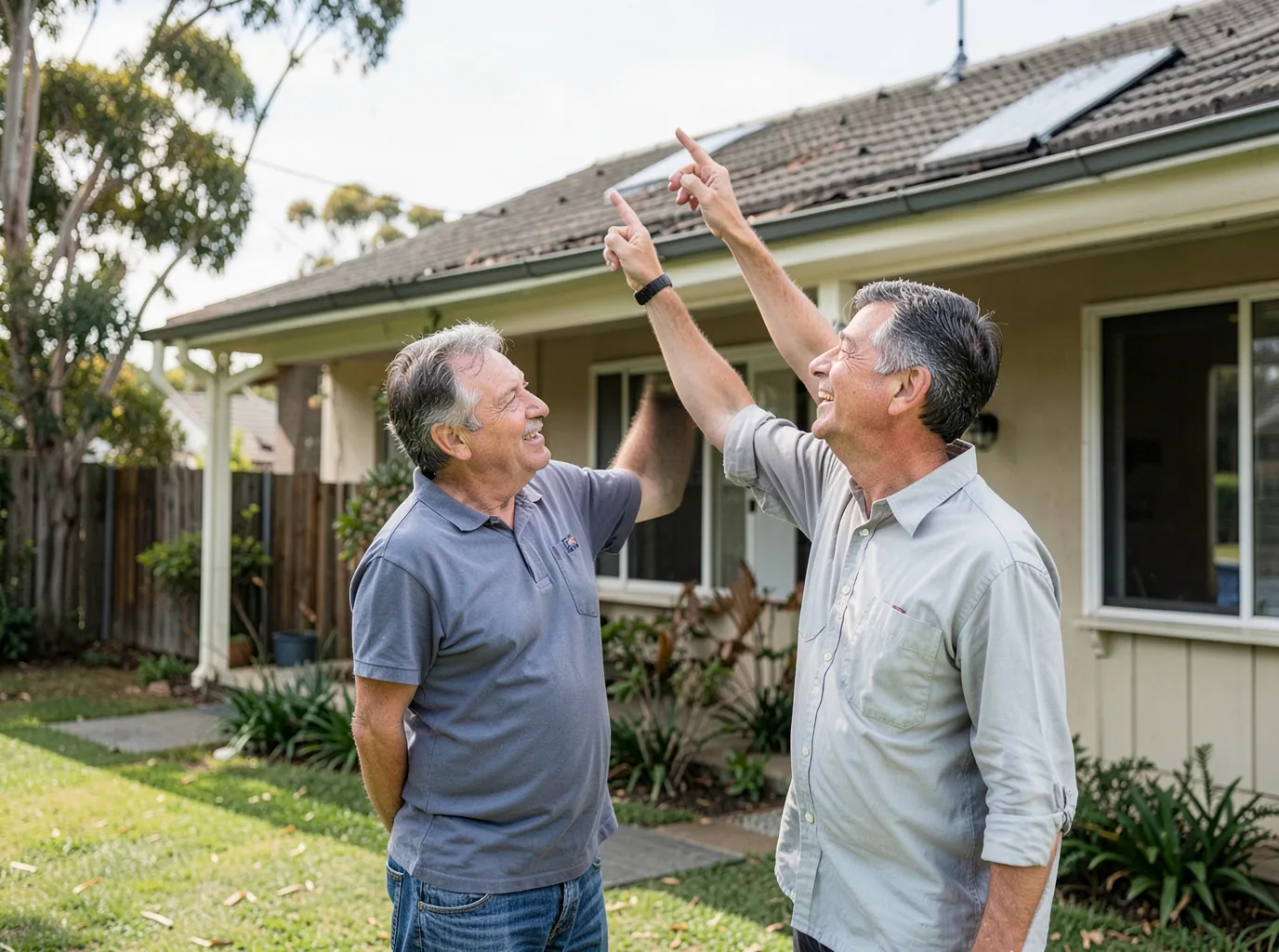
The eaves are one of the most common ways a possum gets into a roof. Where the roof sheets or tiles meet the fascia and gutter, there is often a small gap that widens as timber shrinks and iron lifts over the years. A possum can squeeze through a space not much bigger than a tennis ball. On homes in Clayfield with deep eaves and old timber linings, those gaps can run the whole length of the house.
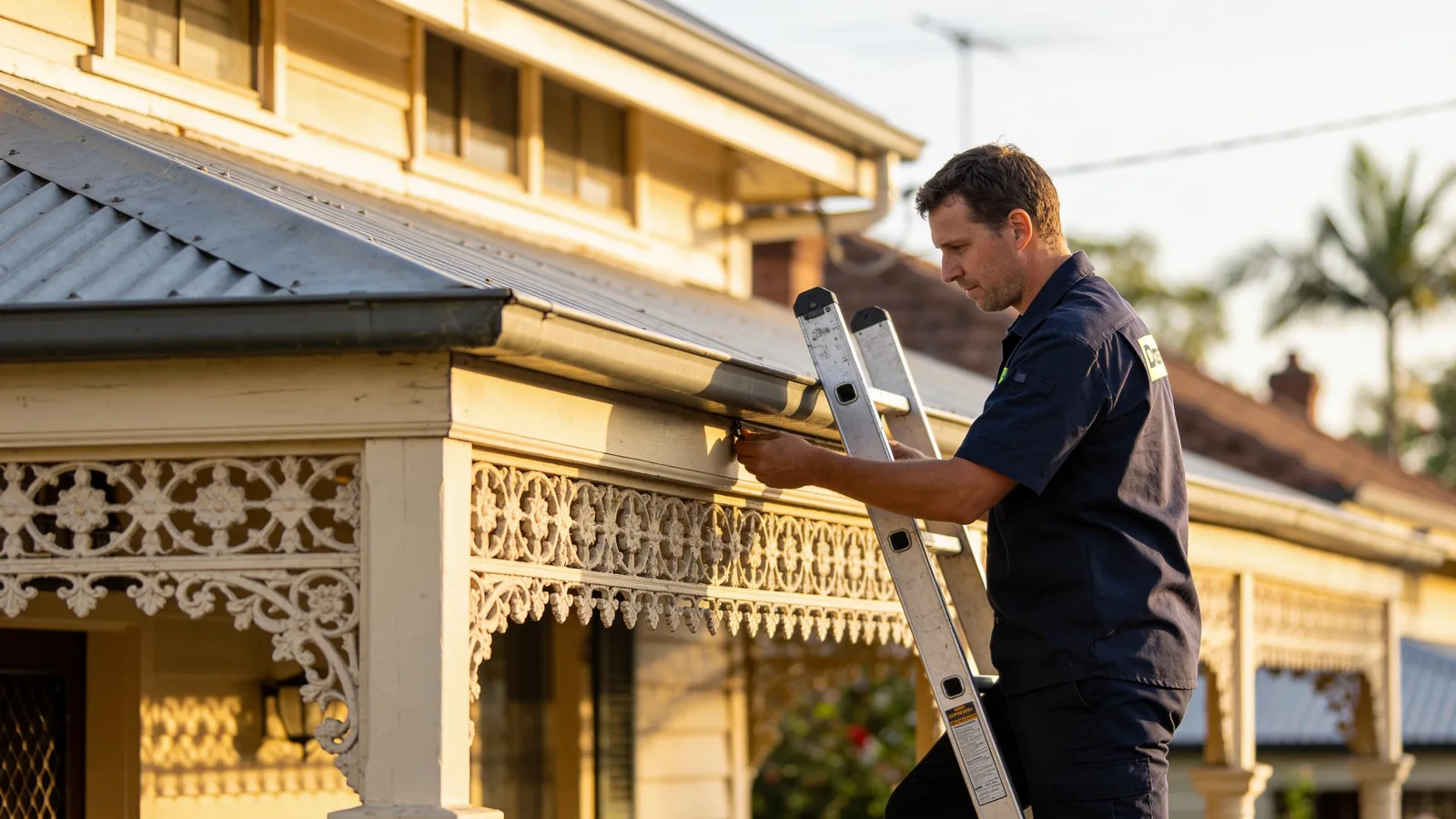
The crew we book walks the full perimeter and checks the eaves from the ladder. They look for gaps between the roof and fascia, loose or missing eave linings, holes where old downlights or cables once passed through, and spots where weather has worn the timber. Rub marks and dark staining on the fascia often show exactly where a possum has been getting in.
Gaps are sealed with galvanised mesh, foam-backed metal strips or flexible sealant, depending on the size and shape of the gap. Loose eave linings can be screwed back into place. If the fascia is rotted through, the crew will show you before sealing so you can decide how to handle it.
- Full perimeter check of eaves and fascia
- Roof-to-fascia gaps sealed
- Loose eave linings screwed back into place
- Old cable and light holes closed off
- Rotted fascia pointed out before work starts
Eave sealing is often the biggest part of proofing an older home. Call 07 3543 7766 to book eave gap sealing in Clayfield. Tell us roughly how big the house is and we will give you upfront pricing.